
Loading...
Loading...
Home
Blog Details

By Ambition Finserve Pvt. Ltd. | AMFI Registered Mutual Fund Distributor (ARN 179273)
The mutual fund SIP stoppage ratio fell to 78.53% in September 2026, down from 81.05% in August 2026. This is the fifth month in a row that the ratio has come down, according to data released by the Association of Mutual Funds in India (AMFI), as reported by The Economic Times.
The SIP stoppage ratio compares the number of SIPs that were discontinued or completed in a month with the number of new SIPs registered in that month.
Two points are important to understand:
So a high ratio does not always mean that investors are losing faith in SIPs.
| Month | Stoppage Ratio |
|---|---|
| May 2026 | 95.46% |
| August 2026 | 81.05% |
| September 2026 | 78.53% |
| September 2025 (a year ago) | 76.27% |
The ratio has eased steadily since May 2026. It is still slightly higher than it was in September 2025.
In September 2026, mutual funds recorded:
|
63.26 lakh new SIP registrations |
49.68 lakh SIPs discontinued or completed |
In August 2026, the figures were 66.40 lakh new registrations against 53.82 lakh discontinued or completed SIPs.
In both months, new registrations were higher than the number of SIPs that ended. In September, this was true for the fifth month in a row.
Monthly SIP inflows rose to ₹32,490 crore in September 2026 from ₹32,297 crore in August. This is 11% higher than the ₹29,361 crore recorded in September 2025.
Other SIP numbers from the AMFI data:
The wider mutual fund industry had a mixed month:
This data shows that SIP investing remains popular, even in a month when overall industry AUM declined. Here are a few takeaways for individual investors:
Before starting or changing a SIP, think about:
At Ambition Finserve, we help investors understand mutual fund options and plan SIPs around their goals. If you would like guidance, you can reach out to our team through the contact page on our website.
The ratio is SIPs discontinued or completed divided by new SIPs registered in the same month. In September 2026, that is 49.68 lakh divided by 63.26 lakh, which gives 78.53%. In August 2026, it was 53.82 lakh divided by 66.40 lakh, which gives 81.05%. Net additions are new registrations minus SIPs that ended. In September 2026, that is 63.26 lakh minus 49.68 lakh, or about 13.58 lakh net new SIPs. In August 2026, it was about 12.58 lakh. A ratio below 100% always means net additions are positive. The ratio improved from 95.46% in May 2026 to 78.53% in September 2026, but it was 76.27% in September 2025. So the trend is improving, but the ratio has not yet gone back to last year's level. A single month-on-month or year-on-year comparison should be read along with new registrations and inflows. They measure different things. SIP inflows are the money investors put in during the month, which rose to ₹32,490 crore. Total AUM is the market value of all assets, and AMFI's CEO attributed the fall mainly to mark-to-market losses and outflows from debt funds. So AUM can fall even when investors keep contributing through SIPs. SIP assets of ₹17.86 lakh crore are 21.6% of the industry's total AUM of ₹82.64 lakh crore. In simple words, about one rupee in every five managed by mutual funds comes through SIP accounts. It shows how important regular investing has become for the industry. Dividing ₹32,490 crore of monthly inflows by 10.06 crore contributing SIP accounts gives roughly ₹3,200 per account per month. This is only a rough average worked out from the AMFI figures. Actual SIP amounts vary widely from investor to investor, and one investor may hold more than one SIP. Not necessarily. The ratio also counts SIPs that finished their chosen tenure and investors who stopped one SIP to start another as part of a portfolio change. That is why it should be read together with new registrations, net additions and inflows. The stoppage ratio is an industry-level number and does not describe your own goals. Any decision to continue, change or stop a SIP should be based on your financial goal, time horizon and risk profile, not on one data point or a headline. This is general education and not investment advice, so you can speak to your mutual fund distributor or advisor before making changes. It was 78.53%, down from 81.05% in August 2026. It was the fifth month in a row that the ratio came down. The data was released by the Association of Mutual Funds in India (AMFI) and reported by The Economic Times.
How is the SIP stoppage ratio calculated?
What were the net SIP additions in September 2026?
If the ratio is falling, why is it still higher than September 2025?
Why did SIP inflows rise when total mutual fund AUM fell 5.1%?
What does SIP assets at 21.6% of industry AUM mean?
What is the average SIP amount per contributing account?
Does a high stoppage ratio mean investors are quitting SIPs?
Should I stop my SIP if the stoppage ratio rises?
What was the SIP stoppage ratio in September 2026?
Where does this data come from?
The SIP stoppage ratio fell for the fifth month in a row to 78.53% in September 2026. New registrations stayed higher than discontinued or completed SIPs, and monthly SIP inflows rose to ₹32,490 crore, even as the industry's overall AUM declined.
Key lesson for investors
A SIP works best when it is matched to your goals and continued with patience.
Source: Association of Mutual Funds in India (AMFI) data, as reported by The Economic Times.
Disclaimer: This blog is for educational purposes only and is not investment advice or a recommendation to buy or sell any security or scheme. Mutual fund investments are subject to market risks. Read all scheme-related documents carefully before investing. Past performance may or may not be sustained in the future. Ambition Finserve Pvt. Ltd. is an AMFI Registered Mutual Fund Distributor (ARN 179273).
Recent Blogs

SEBI Nomination and Transmission Rules 2026 Explained
Understand SEBI’s new 2026 nomination and transmission rules for mutual funds and demat accounts, effective dates, documents and investor actions.
Read insights
REITs in India 2026: Meaning, Taxation & Risks
Learn how REITs work in India, how they generate income, their taxation, major benefits, key risks and suitability for investors.
Read insights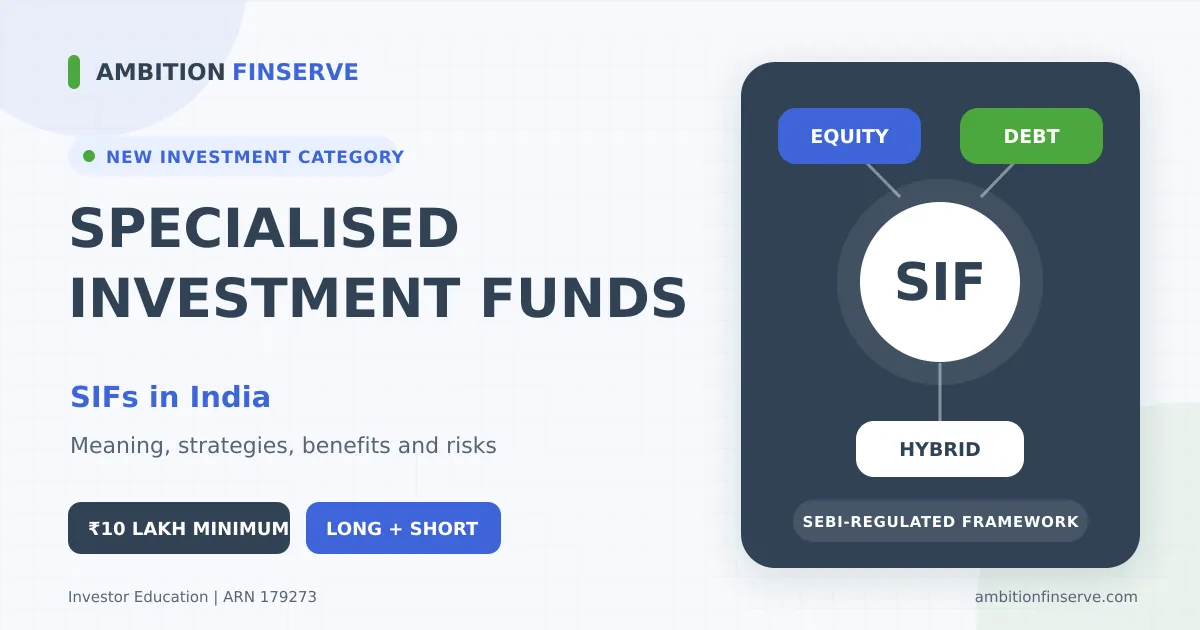
Specialised Investment Funds in India: SIF Guide 2026
Learn about Specialised Investment Funds in India, including the ₹10 lakh minimum, permitted strategies, benefits, risks and investor suitability.
Read insights
How Mutual Funds Support Goal-Based Investing
How Mutual Funds Support Goal-Based Investing
Read insights
Understanding Risk and Return in Financial Investments
Understanding Risk and Return in Financial Investments
Read insights
The Importance of Financial Planning for Long-Term Stability
The Importance of Financial Planning for Long-Term Stability
Read insights
Investors are encouraged to make informed decisions and regularly review their investments in line with changing financial needs and market conditions.
Investors are encouraged to make informed decisions and regularly review their investments in line with changing financial needs and market conditions.
Read insights